Irvin D. Yalom. “When Nietzsche Wept”, a Teaching Novel
Posted: May 13, 2014 Filed under: Books | Tags: Book Review, Historic Novel, Lou Andreas Salome, Nietzsche, philosophy, psychotherapy, Yalom 2 Comments
 “Yalom’s virtuosity has resided in a particular capacity to meld philosophy, literature and psychiatry into a corpus of work that illuminates life-as-lived for all” wrote his colleague and biographer Dr. Ruthellen Josselson. Yalom’s books on psychotherapy are widely read around the world and one of his most well know theoretical books on mental health practice, The Theory and Practice of Group Psychotherapy has been translated into seventeen languages and together with Existential Psychotherapy is considered a classic in its field, making Yalom a highly acclaimed scholar.

Yalom has also been internationally recognized as a fiction writer for his novels, particularly When Nietzsche Wept, a best seller translated into more than 20 languages. In this novel Yalom’s experience as a therapist is manifested together with his knowledge of philosophy, a field that he has cultivated since his early years as a student at the university.
Yalom’s novels could be considered historical fiction, a literary genre that has been popular since ancient times. The Iliad by Homer about the Trojan War and Shakespeare’s tragedies are some examples of old classic texts. In modern times, Joseph and his Brothers by Thomas Mann, based on the Book of Genesis, The Ides of March by Thornton Wilder about the last days of Julius Caesar and more recently The Name of the Rose by Umberto Eco, a well-acclaimed novel about a manuscript of a monk describing convent life in the Middle Ages and the struggle between different church orders, as well as The Medici Boy, a novel by John L’Heureux published a short time ago, about the life of Donatello, the famous Italian artist in the 15th century, provide other relevant examples.
In this type of novel, the characters are historic figures appearing with their real names and the plot is built around well documented historic facts, including descriptions of epoch, location, situation, background, physical appearance of the characters and, in some cases, complete texts from published books or letters. This genre is so demanding that its writers not only have to be good at fiction, but also need to equipped with research skills to create a sense of historical reality.
Regarding When Nietzsche Wept, its principal characters include Nietzsche, the famous philosopher, and Dr. Joseph Breuer, the prominent Viennese therapist who has been considered as one of the founders of modern psychoanalysis, together with Lou Andreas Salome, a controversial Russian writer with whom Nietzsche was obsessively in love. Sigmund Freud also appears in the novel as a close young disciple of Breuer’s at the time. The roles and conversations of the characters, although mostly based on actual events mentioned in their biographies, published letters and writings, mainly Nietzsche’s Thus Spake Zarathustra, are partly fictionalized.
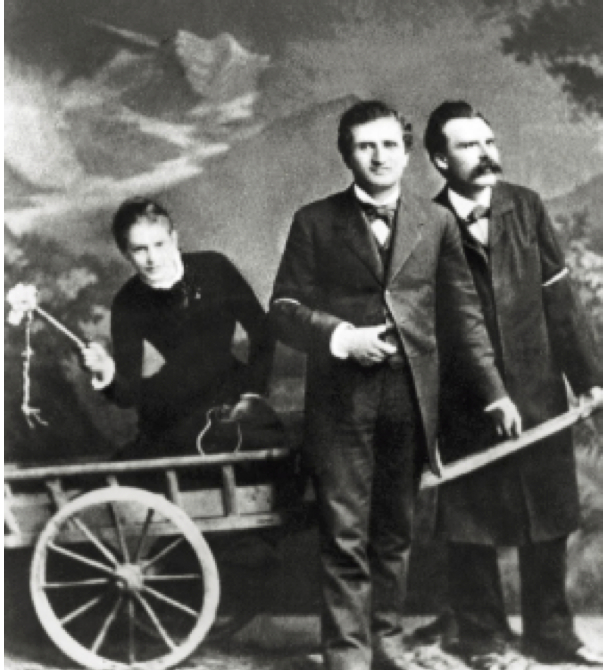
The novel begins with a meeting in October 1882 at a cafe in Venice where Lou Andreas Salome, then a young good looking and sophisticated Intellectual woman, asked Dr. Breuer to help her friend Nietzsche as he was deeply depressed and would probably kill himself. “It would be a great loss for me, and a great personal tragedy because I would bear some responsibility,” she pleaded. Andreas explained that Nietzsche was madly in love with her and after living together in a “chaste” ménage à trois which also included Paul Rée, another philosopher and Nietzsche’s disciple many years before. The “intellectual honeymoon of our unholy Trinity was also brief. Fissures appeared”, Andreas explained that Nietzsche was deeply hurt when she refused his marriage proposal. This affair briefly mentioned in the novel happened in real life and is well documented, including a famous photograph taken in Lucerne showing Nietzsche and Rée pretending to pull a cart with Lou Andreas inside brandishing a small whip —- many attributed this moment, regarding the problem with Lou Andreas to a famous quote from Thus Spake Zarathustra, First part XVIII. Old and Young Women: “Thou goest to women? Do not forget thy whip!”
 Dr. Breuer seemed reluctant to take the case but became interested in the story and offered to recommend other doctors. Salomé insisted. “Nietzsche has exhausted the medical resources of Germany, Switzerland, and Italy. No physician has been able to comprehend his malady or relieve his symptoms” and she added, “you are a doctor for despair”. Breuer replied, “Despair is not a medical symptom, Fraulein.” Already hinting to a future therapy for mental illness, Salome, undeterred by the answer, reminded Breuer that her brother had attended Breuer’s classes, in which he, as a practitioner described how “uncovering of the origin of each symptom somehow dissolved it. ”
To make the case more complicated and at the same time appealing to Breuer, Lou Salome told him that Nietzsche “doesn’t know that I’m speaking to you. He is an intensely private person and a proud man”, therefore Breuer had to conceal any previous knowledge of the situation of his future patient and his relationship with her.
At the end of a long intriguing conversation, Lou Andreas’ description of Nietzsche’s ideas and work together with exceptional circumstances made Breuer accept the challenge. “my dear lady…, I will see your friend. That goes without saying. After all, I am a physician”.
The framework of the story is now set and the plot centers around the meetings, conversations, notes and internal dialogues between the two brilliant minds of Nietzsche and Breuer, both suffering from the despair born from impossible obsessive love with younger attractive women.
The story shows how the roles of the therapist and patient blur when the fictional Nietzsche starts to take notes about Dr. Breuer’s obsessions and how he can best help him, turning the philosopher into a healer or a therapist. We can assume that the same kind of experience happened to Yalom in his own professional practice since he regularly refers to his passion for stories about old healers particularly to Hermann Hesse’s novel Magister Ludi, which tells a tale about two renowned healers and indirectly touches on the nature of the patient-therapist relationship. In his own words, “.. the echoes of these tales ring throughout the pages of the novel.”
By choosing a psychotherapist and a philosopher with historical relevance as the main characters of When Nietzsche Wept makes it possible to uncover other elements in Yalom’s biography. In her book Irvin D. Yalom: On Psychotherapy and the Human Condition, Ruthellen Josselson reveals how Yalom “was intrigued by the links between philosophical reflection and the healing that takes place in psychotherapy, implying that, like in the story “the philosophers were covert therapists.”
Making Nietzsche a therapist was one of the ideas that inspired Yalom to write the fiction novel, a possibility which, he thought, “could have happened”, quoting Andre Gide: ‘history is fiction that did happen. Whereas fiction is history that might have happened.”
When Nietzsche Wept clearly shows Yalom’s talent as a fiction writer, a philosopher and one of the most admired psychotherapists of our time, particularly displaying his knowledge and imagination to vividly portray Nietzsche’s broken relationship with Lou Andreas Salome, the torments that followed and the path to recovery.
At the end of the story, Yalom included a special section titled “On Writing a Teaching Novel”, where he describes in some detail the sources that inspired his book together with some of the ideas underlying the novel, written in a style that allows the readers to become acquainted with some important moments of the history of psychotherapy: the terminology and the healing process for despair and depression, ailments that afflicted Frederich Nietzsche. Clearly Yalom has achieved his goal by making up a story of a complex relationships, an exciting thriller full of interesting insights into philosophy, psychology, and the fragility of the human being.
Excerpts From:
Irvin D. Yalom. When Nietzsche Wept. Basic Books 1991 & HarperCollins Publishers 2011
Ruthellen Josselson. Irvin D. Yalom: On Psychotherapy and the Human Condition. Jorge Pinto Books, Inc. 2007 Available in iTunes iBook
https://itunesconnect.apple.com/WebObjects/iTunesConnect.woa/wo/8.0.0.11.5.0.7.3.1.17.1.11.1.9.1.0.1.0.8.1
Mario Vargas Llosa. “The Notebooks of Don Rigoberto” | The Use of Self-introspection, Diary, Reference and Conversation.
Posted: April 20, 2014 Filed under: Books | Tags: Book Review, Literary Critics, Literature 2 Comments One of the greatest attributes of Mario Vargas Llosa’s fiction writings is the complex characters which so well represent the diversity of Latin America’s social and ethnic landscape. Using the voices of self-introspection, personal diaries and conversations, Vargas Llosa manages to create individuals with very different tastes, economic backgrounds and educational levels; women and men that are happy or sad; that love, hate or fear; that dream or despair.

With humor and satire, Vargas Llosa’s stories deal with love, power, history and ideology, exploring a vast range of situations and problems that human relationships confront. Vargas Llosa’s novels take the readers to Lima, Santo Domingo, Paris, Mexico, Buenos Aires and many other cities that he undoubtedly knows first hand.
His historic novels, The War of the End of the World (La guerra del fin del mundo) and The Feast of the Goat (La fiesta del chivo), demonstrate his talent as a storyteller as well as a serious scholar and journalist.
Most of his novels seem to be directly related to his own life. His second novel The Time of the Hero (La Ciudad de los Perros) tells about the life of certain young cadets who confront the severe hardships from the military hierarchy, which seems to be inspired by his own experience. His father sent him to the Leoncio Prado Military School in Lima Peru at age 16.
In a brief speech at the Nobel banquet in Sweden after receiving the 2010 Literature Prize,Vargas Llosa revealed his own background. He recalled the adventures of a 5-year-old boy – clearly himself – that read, discovering “a way to escape from the poor house, the poor country and the poor reality in which he lived, and to journey to wonderful, mesmerizing places peopled with the most beautiful beings and the most surprising things, where every day and every night brought a more intense, more thrilling more unusual form of bliss”. He ended the speech by telling the audience that the protagonist of the story, now an adult, had received a mysterious call announcing “that he had won a prize and that in order to receive it he would have to travel to a place called Stockholm, the capital of a land called Sweden.”
The Notebooks of Don Rigoberto, published in Spanish in 1997 was soon translated in English into 1998 by Edith Grossman. It can be classified as ‘erotic picaresque”, a genre that Vargas Llosa uses in many other novels. This one in particular is full of erotic content in the form of notes, letters and conversations that illustrate internal conflicts and delicious evocations of love scenes between Don Rigoberto, a highly educated man that is also an insurance executive and Doña Lucrecia, his second wife.
When the translation was published, The New York Times’ critic Walter Kendrickpresented Vargas Llosa’s book as “a pornographic novel”,focusing on the erotic descriptions in Rigoberto’s mind and real scenes enacted by the couple in bed. Mr. Kendrick and other criticsmiss the complexity of Vargas Llosa multi-layered narrative, which explores moral, emotional, physical and psychological issues, using images of famous paintings by Gustave Klimt, Félix Vallotton, Balthus and Fernando Botero, as well as quotes of Casanova, Marquis de Sade and many other classic authors skillfully chosen to be part of the story.
In addition to Don Rigoberto and Doña Lucrecia, there are two other relevant characters in the novel. One is Fonchito (nickname for Alfonso), the teenage son from Rigoberto’s first marriage, who is so obsessed with Egon Schiele’s life and his erotic paintings that he spends“hours looking at them in my papá’s books”. Fonchito also uses specific portraits by Schiele in “games” to try to seduce his stepmother “innocently” by asking her to “pose like the lady in ’Reclining Nude in Green Stockings...”, while mischievously adding, “without undressing…” Lucrecia comments on Fonchito’s actions: “The damn kid had the diabolical habit of turning the conversation to salacious topics, playing the innocent all the while”
The other character is Justiniana, Doña Lucrecia’s trusted maid and confidant, who, despite of her limited education, has the sensibility to understand the complexity of her boss’s relationship with Don Rigoberto and his son Fonchito. “She’s more than an employee to me. I don’t know what I would have done without her.” Doña Lucrecia tells Fonchito, “I don’t have the stupid prejudices against servants that other people in Lima have”, referring to the thorny relationship that the upper classes have with their servants.
The story takes place in Lima and its three main characters belong to the educated upper middle class of the Peruvian society, which, as in most of Latin American countries, means that people with relative wealth can afford expensive homes, art collections, regular trips to Europe and New York as well as the luxury of having full time in-house staff like Justiniana. These people manage all the housework plus taking care of the children and, like in the novel, also of their boss.
.Don Rigoberto is a lonely individualistic executive full of mania and phobia kept in his notebooks, which are key part of the story. He reads and writes these notebooks late at night in his library revealing his sexually charged fantasiesand complicated relationships, many of which are inspired by books, paintings and music that he lists and describes with explicit details, which may be one of the reasons why some critics considered the novel to be borderline pornographic.
Don Rigoberto’s life is full of contradictions. On the one hand, he “had already spent a quarter of a century at the insurance company, surrounded by, submerged in, asphyxiated by stupidity” and, on the other hand, is an erudite reader, peculiarly attracted to erotic art. As a collector he designs his library dogmatically to be “in the small constructed space that I will call my world and that will be ruled by my whims”. He wants a library that holds “four thousand volumes and one hundred canvases and prints”and he adds,“to avoid excessive abundance and disorder, I will never own more”. To explain his eccentric idea, Rigoberto writes, “… for each book I add to my library, I eliminate another, and each image that enters my collection—lithograph, woodcut, xylograph, drawing, engraving, mixed media, oil painting, watercolor, etcetera—displaces the least favorite among all the others.”
Vargas Llosa offers an enjoyable multi-layered text, full of well-integrated references. The book is so rich that the readers are advised to make a list in their own notebooks of the books and artworks quoted by Vargas Llosa in this particular novel for the pleasure of further cross reading.
>>>>>>>>>>
Excerpts From: Mario Vargas Llosa. “The Notebooks of Don Rigoberto.” iBooks. https://itunes.apple.com/us/book/notebooks-don-rigoberto/id424009317?mt=11
Joseph Conrad and the Darkness of Heart. Part II, “Under the Western Eyes”
Posted: April 5, 2014 Filed under: Books | Tags: Book Reviews, Books, Classics, Joseph Conrad 1 Comment Under the Western Eyes, first published in 1911, is the other remarkable novel written by Conrad dealing with the dark human aspects linked to extreme ideologies. Unfortunately this destructive power continues to be very much alive today.

In The Secret Agent, Conrad describes the “dark heart” of a bureaucrat in great detail. The First Secretary at the French Embassy in London is ready to destroy a landmark building and, if necessary, to kill innocent people in order to force the British to adopt repressive measures against their political dissidents.
In Under the Western Eyes, Conrad chooses a terrorist as another example of the “dark heart”. Haldin, the main character of this extraordinary novel, is a young Russian student who proudly identifies himself as a “destructor”, after killing the hated repressive official Mr. P— and possibly bystanders by throwing a bomb.
Following the successful terrorist act, Haldin hides in the home of Razumov, a lonely student whose acquaintance he made in university. He immediately feels that his future is threatened by Haldin’s ominous presence in his quarters. Haldin says “It was I who removed P— this morning.” trying to make his situation clear, and goes on in a challenging tone: ”Men like me are necessary to make room for self-contained, thinking men like you”, demeaning his colleague, who now becomes an unintentional accomplice. “All I want you to do is to help me to vanish”. With these words Haldin starts to set the stage for a series of events which radically changed Razumov’s life as revealed in his diary “…I, who love my country—who have nothing but that to love and put my faith in—am I to have my future, perhaps my usefulness, ruined by this sanguinary fanatic?”
From here the story unfolds a full range of unexpected developments, showing Conrad’s unique talent as a storyteller with details of the ominous symptoms of the time in pre-revolution Russia. In the story, Conrad uses quotes from a journal that Razumov keeps after his encounter with the terrorist to demonstrate his internal conflicts, family background and the painful awakening path that connects him with extremists and revolutionaries as well as with rich powerful individuals in both Russia and the West.
The plot uses Razumov’s internal tribulations stated in his diary and the interesting conversations taking place in Geneva about the brewing Russian revolution and the incapability of the western world to comprehend it. As this emigre in Geneva explains to her English professor, “You think it is a class conflict, or a conflict of interests, as social contests are with you in Europe. But it is not that at all. It is something quite different”. The professor, who seems to be Conrad’s own mouthpiece, replies to his Russian interlocutor “A violent revolution falls into the hands of narrow-minded fanatics and of tyrannical hypocrites at first.” The professor goes further in his negative views on revolutions: “The scrupulous and the just, the noble, humane, and devoted natures; the unselfish and the intelligent may begin a movement—but it passes away from them. They are not the leaders of a revolution. They are its victims: the victims of disgust, of disenchantment—often of remorse.” Clearly here Conrad anticipates with great lucidity the future of the Soviet Revolution five years later. Actually his comments are still valid taking a look at the negative results of the Orange revolution in Ukraine and the Spring revolutions in the Middle East.
Among other characters living in Geneva, Under the Western Eyes also includes an influential Russian writer who advocates radical feminists ideas, and Madame de S—, a rich lady with an aristocratic family background, famous for hosting “soirees” in her chateau with Russians and political conspirators. The character of Madame de S seems to have been inspired by Mme de Staël, the 19th century French political writer, who also lived near Geneva in a chateau and was famous for her “salon” style gatherings, attended by refugees and political thinkers in the Napoleonic era
This year is the 100th anniversary of the beginning of the World War I in which millions lost their lives. That war was triggered by the assassination of Austrian Archduke Franz Ferdinand and his wife in Sarajevo on June 28, 1914, three years after Under the Western Eyes was published.
There are remarkable resemblances between the fictional events of this novella and the actual occurrences which bring about historic implications. In Conrad’s novel, Mr. P—, Haldin’s target, survives during the terrorist attack while driven in a two-horse uncovered sleigh with a coachman who gets killed instead whereas in real life Archduke Franz Ferdinand was riding in an open-topped car when a terrorist threw two grenades that missed the royal member but wounded the officers badly in the car behind. In both cases, the assassination plot is completed by a second terrorist: in the novel, Haldin throws a bomb that kills the standstill target whereas in history, after the first failed attempt, Princip, the assassin, fired two shots to an almost motionless car killing the Archduke in Sarajevo and resulting in World War I.
These similarities that could be considered premonitions were again repeated 90 years later with the assassination of John F. Kennedy in Dallas, 1963. Moreover, terrorist acts that target buildings as in The Secret Agent (mentioned in Part I of this article) turned into tragic reality on September 11, 2001 with the attacks on the Twin Towers in New York, igniting the wars in Iraq and Afghanistan.
Reading Under the Western Eyes and The Secret Agent certainly helps readers to better understand what Joseph Conrad meant by “Heart of Darkness” the title of one of his best well-known novels.
>>>>>>>>>>
Excerpt From Joseph Conrad’s Under the Western Eyes, 1911.
iBooks. https://itun.es/us/PSzUD.l
Joseph Conrad and the Darkness of Heart. Part I. “The Secret Agent”.
Posted: March 25, 2014 Filed under: Books | Tags: Book Reviews, Books, Classics, Joseph Conrad, London, Secret Agent 2 Comments Joseph Conrad is considered one of the most important writers in the 20th century. He was Born in 1857 in Berdichev, a region of Poland which today belongs to Ukraine. He became a British national at the age of 29, using English as his writing language.
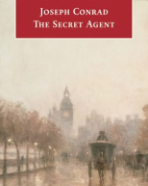
Conrad is a prolific author who wrote dozens of short stories, novels, and travel journals. He excelled at the subject of adventures, including colonial undertakings in Africa. He is less known for his prophetical novels on the political intrigues and conflicts in Europe which reveal his profound knowledge and insight of these complicated issues.
Some situations portrayed in his political novels Under the Western Eyes and The Secret Agent could still be easily identified in the present time. Even if these extraordinary novels are fictional, both contain rich descriptions of certain terrorist plots or activities of the “agent provocateurs” and spies paid by foreign governments.
The main purpose of hiring these kind of agents is to warn their recruiting governments about the potentially dangerous activities of the radical groups. Governments that pay for this kind of “dark agents” also attempt to spread their influences in other countries.
The Secret Agent, written in 1907, is the story of Mr. Verloc, an agent employed by the French Government to report about the activities and plans of socialists, anarchists and other underground political figures living in London. These type of personalities would gather late in the evening in Mr. Verloc’s small shop which, on the surface, sells “obscure newspapers, badly printed, with titles like ‘The Torch’,‘The Gong’—rousing titles” with windows displaying “photographs of more or less undressed dancing girls”. Mr. Verloc was also one of the Vice-Presidents of an organization named “The Future of the Proletariat”
Despite all these links, Mr. Verloc enjoys a comfortable bourgeois double life with his family until he receives a “peremptory letter” summoning him to the French Embassy in the daytime, an unprecedented and unpleasant situation that can damage his image with his comrades.
He is received with some contempt by a new First Secretary, who says “I have here some of your reports” mocking Verloc’s accounts as useless and expensive. “In the time of Baron Stott-Wartenheim (the previous French Ambassador) we had a lot of soft-headed people running this Embassy.” And he continues, “What is required at present is not writing.. now we want facts…”
To convey what he means by “facts” and what Mr. Verloc is required to do to continue getting paid, the French diplomat explains that his government considers it “dangerous” that England has an absurd “sentimental regard for individual liberty position” opposing to tougher measures to combat political dissidents, soon to be discussed in an international meeting on security issues. “What we want is to administer a tonic to the Conference in Milan,” he says, “..its deliberations upon international action for the suppression of political crime don’t seem to get anywhere. England lags.“, the bureaucrat claims.
The First Secretary carries on his monologue outlining his plan to “induce” England to accept new repressive policies. He orders Mr. Verloc to organise a series of terrorist acts to be “executed here in this country; not only planned here”. That will shock and scare the middle class, turning them in favour of measures to make them feel secure. These acts, he says “…must be sufficiently startling—effective. Let them be directed against buildings…the fetish of the hour that all the bourgeoisie recognise…”.
Almost as an anticipated ominous warning, 94 years after this novel was published, the U.S. suffered a series of well-planned terrorist attacks in 2001, mainly targeted at buildings, killing more that 3,000 people and destroying the Twin Towers of the World Trade Center, one of the most famous Manhatan landmarks.
In this classical novel, Joseph Conrad demonstrates his deep understanding of the radical minds of his time behind convulsive political intrigues that created tensions and serious conflicts, ending with the First World War.
It is clear that Conrad was aware of the destructive nature of radical ideologies that tended to justify violence and terrorism, disregarding innocent human lives for the sake of an abstract cause. In The Secret Agent and Under the Western Eyes he explores the so-called “Heart of Darkness”, a metaphor of dark spirit, as used in the book title of one of his most famous novels.
These two works, written more than 100 years ago, are not the only classic novels that deal with these current complex political and social topics. Dostoyevsky, some 30 years before Conrad, wrote The Possessed, a.k.a. Devils or Demons, which also tackles terrorism, a topic that regrettably continues to be very much alive today.
>>>>>>
Excerpts From: Conrad, Joseph. “The Secret Agent.” iBooks. https://itunes.apple.com/WebObjects/MZStore.woa/wa/viewBook?id=395547608
Letters as an Art Form and a Source of History. Part II. Rilke, Kafka, Van Gogh, Freud, Churchill, Lennon
Posted: March 18, 2014 Filed under: Books, Uncategorized | Tags: Churchill, Freud, Lennon, Rilke, Van Gogh 2 Comments Part II

…. I will provide some of the historic contexts and literary backgrounds, starting with the correspondences between Thomas Mann and Herman Hesse, two renowned literature Nobel Prize winners, including texts that showed their fears during the rise of Nazism in Germany and Hitler’s arrival to power. They wrote about the impact of this dark regime in their literary works as well as their feelings on witnessing the tragedy their own country was going through during those years. Even in the early days of Hitler both authors sensed that something very wrong was happening to their country. As Thomas Mann mentioned in his letter dated July 1933 to Hesse, “Day by day news from Germany, the deceit, the violence, the ridiculous show of ‘historical grandeur’, the sheer cruelty, fill me with horror, contempt and revulsion”. In 1934 Mann wrote, “I am so plagued by the happenings in Germany, they are such a torment to my moral and critical conscience, that I seem to be unable to carry on with my current literary work.” Hesse, on the other hand, expressed his fear for the safety of his family and close friends, “At the moment any wrath aroused by my name is likely to bring physical mistreatment and other troubles on my friends”, he wrote in February 1937. By contrast, in most of their letters, there are direct references to the books which they were reading and what they were writing at that time. With great eloquence, Pete Hamill wrote an introduction to the latest English re-print edition by Jorge Pinto Books, describing his experience reading the letters, “…I feel like some privileged guest in a special room, sitting off to the side somewhere, listening while these men talk.”
To complement the views of these two exceptional writers regarding the horrors which followed Hitler’s destructive path from the early 1930s, there are also some relevant passages in the letter that Winston Churchill wrote to his wife Clementine before the UK’s involvement in World War II, giving his account of the events that had led to the war. These personal letters provide a spontaneous personal description of the challenges that his country and Europe were facing at the time.
In a less somber theme, I find Rainer Maria Rilke’s letters to Lou Andreas-Salome refreshing, under the title “Rilke and Andreas-Salome: a love story in letters” and his own “Letters to a Young Poet”, which include references to poetry and love. The content of these letters show his frankness and desire for intellectual conversations and are full of wisdom, showing at the same time the unique passionate sensibility of this great artist and his immense capacity to express and discuss love.
The same characteristic can also be found in the letters of Franz Kafka to his two lovers, Milena and Felice, to whom he almost wrote daily. From the two collections, we realize that Kafka is not only a great novelist but also a fertile and passionate correspondent.
The collections of avant-garde artist Van Gogh’s letters to Theo, his brother, are full of references to what art and painting meant to him as well as to other famous artists such as Monet and Gauguin.
The extensive correspondence of Sigmund Freud to his fiancé, colleagues, patients, friends and family members show how the Father of Psychoanalysis used letters to share his knowledge and insight of the human condition way beyond his professional realm.
Sending letters in the past required time and patience. Correspondence has its own protocol: once a letter is completed, it is usually sent folded in an envelope and, in some cases, sealed with wax to avoid tampering. Some rich individuals and government officials have their own trusted messengers; others might ask friends or relatives to deliver their letters just to feel more secure. Postal services have existed since ancient times in a relay fashion similar to ours, with one messenger passing letters on to another at a certain post or tavern along defined routes linking different cities and even countries. With the introduction of a more affordable national postal service together with a growing educated and well-traveled middle class in the mid-18th century, letter writing began to flourish with messages exchanged almost globally. That form of communication requires people to wait patiently for weeks before the postmen bring replies to their messages. To illustrate what expecting a letter meant I would like to quote from the final paragraph of one of Mrs. Churchill’s letters to her husband Winston in 1915: “The post will be here in a few minutes & eagerly await a letter from you”. Sigmund Freud seemed to be frustrated with the slow postal system and complained to Carl Jung in 1911, “I am writing you again this year, because I can’t always wait for you to answer and prefer to write when I have time and am in the mood… “.
An interesting phenomenon of letter communication is the fact that active writers, in general, are highly disciplined and tend to keep organized collections of their letters to make it easy for people to publish them after they die. In some cases, a close family member becomes the editor, as is the case with “The Personal Letters of the Churchills”, of whose selection and editing their daughter Mary Soames was in charge. Likewise, it was Freud’s son Ernest L. who compiled and edited a selection of his father’s letters addressed to Einstein, Thomas Mann, H. G. Wells, Maria Montessori, Carl Jung, Romain Rolland and many others, under the title The Letters of Sigmund Freud. Most of the editions of the collections of letters in the form of a book are made by scholars who are given access to the archives of the original copies.
Letters of famous people can be valuable tangible assets and kept in museums for safe storage and exhibition. For example, in the renowned Barnes Foundation in Philadelphia, the letters of Albert Barnes, its founder and collector, to various artists, intellectuals, gallery owners, etc. are displayed with detailed context and background to show how and why some of the art works of the Museum were acquired.
The material value of letters can be confirmed by the regular auctions where many important letters can fetch a big sum of money depending on who the writers are. To give an idea: the price of a hand-written letter from John Lennon to Eric Clapton reached a pre-sale estimate of US$20,000 to $30,000 in an auction by Profiles in History, a leading dealer in original historical autographs, letters and manuscripts. Two days ago the Financial Times published an article about a new sale of another manuscript by Lennon this time at at Sotheby’s for the same estimated price.
Reading these collections gives a glimpse of the richness of the form of the written communication that is being lost little by little with the arrival of modern technology, including personal computers, internet and portable electronic devices such as iPhones and iPads together with many social platforms which have changed the way we read, interact and communicate with others.
The new media to communicate show a striking contrast through a simpler and instantaneous process: messages can be sent soon after finished with a click of a button. Particularly with improved eMail applications in smartphones, correspondences tend to be fast, made even on the road. Computers, smartphones and tablets have replaced ink, paper and typewriters, whereas internet and wireless communications have greatly diminished the role of the much slower traditional postal services.
Today, almost everybody is connected, receiving and sending dozens of emails a day and probably posting notes and photos on Twitter, Facebook and other social platforms or messaging services. The new communication styles are tremendously different from those of traditional letter-writing, reserved for private moments.
We can easily imagine that in the near future we will see books with selections of private relevant e-mails by famous people. Some of their e-mails could become valuable items for various reasons. Private disk drives and other storage devices could be worth a fortune. Just imagine the value of a selection of Steve Jobs personal e-mail archive!
The abandoning of physical letter-writing as a communication method replaced by electronic mailing is so unprecedented that Malcolm Jones, the well-known author of book reviews, considers that the “decline in letter writing constitutes a cultural shift so vast that in the future, historians may divide time not between B.C. and A.D. but between the eras when people wrote letters and when they did not”
Bibliography Part I & II:
1. Hermann Hesse and Thomas Mann. Introduction by Pete Hamill. The Hesse-Mann letters,1910-1955. Jorge Pinto Books, 2006. http://www.pintobooks.com/rediscoveredbooks2.html
2. Rainer Maria Rilke, Lou Andreas-Salome, Edward Snow (Translator) “Rilke and Andreas-Salome; a love story in letters” W.W. Norton, 1988 https://itunes.apple.com/us/book/rilke-andreas-salome-love/id831234644?mt=11
3. Rainer Maria Rilke Letters to a Young Poet. Dover Publications, 2012. https://itunes.apple.com/us/book/letters-to-a-young-poet/id504543167?mt=11
4. Franz Kafka, Letters to Felice, Knopf Doubleday Publishing Group, 1988. https://itunes.apple.com/us/book/letters-to-felice/id655193304?mt=11
5. Franz Kafka, Letters to Milena, Knopf Doubleday Publishing Group, 1990. https://itunes.apple.com/us/book/letters-to-milena/id655172328?mt=11
6. Vincent van Gogh, The Letters: The Complete Illustrated and Annotated Edition, edited by Leo Jansen, Hans Luijten, and Nienke Bakker, Thames & Hudson, London, 2009. http://www.frick.org/exhibitions/van_gogh/theo#sthash.qtsHZYmd.dpuf
7. Mary Soames, Winston Churchill, Clementine Churchill. The Personal Letters of the Churchills.Houghton Mifflin Harcourt, 1999.
8. Sigmund Freud. Letters of Sigmund Freud. Edited by Ernest L. Freud. Dover, 1992
9. Peter Aspden John Lennon as writer and artist. Financial Times, March 15, 2014 http://www.ft.com/intl/cms/s/2/70227724-a934-11e3-bf0c-00144feab7de.html#slide0
10. Malcolm Jones. The Good Word. Newsweek, January 17, 2009. Link: http://www.thedailybeast.com/newsweek/2009/01/17/the-good-word.html
Letters as an Art Form and a Source of History Part I: Thomas Mann-Herman Hesse
Posted: March 12, 2014 Filed under: Books | Tags: Book Reviews, Herman Hesse, Letters, Literature, Thomas Mann 2 Comments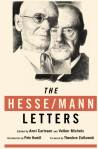 Books with collections of letters written by prominent artists, writers, thinkers, politicians, psychotherapists etc. are rich sources of knowledge which help us to understand different aspects of human nature such as love and friendship and others.
This literary genre allows readers to explore various facets of the personality and temperament of especially those who disguised they true nature or were distorted in their biographies which are sometimes full of lies and self flatteries.
Most of the published letters contain personal exchanges between people that dedicated time and passion to correspond with their lovers, families, friends and so forth. Such material reveals the personality, mood, taste, and personal challenges of the letter-writers. It also gives us the opportunity to get to know the atmosphere of their times and in some cases what was happening when the letters were written, including the spirit of their times, i.e. Zeitgeist.
In general, published correspondences were kept and organized by the writers and/or the addressees, and after their death, these writings passed on to their families or friends, which sometimes resulted in their ending up in museums or foundations or private collections. These institutions or individuals that are in possession of the collections sometimes license the rights to publish books with selections made by experts or authors’ close relatives, who sometimes provide the context of the letters.
Letters also serve as an important source of information for biographers who can quote the writers directly expressing their own voices and intimate feelings that are always relevant for the readers to understand a writer’s character. For example, the controversial Russian author Lou Andreas-Salome used letters to support the biographies on the life and works of Frederick Nietzsche and passionate poet Rainer Maria Rilke respectively, both were romantically linked to her in their lifetime.
There are also many examples of fictional letters that are regularly used in novels as part of a plot, including Ian McEwan’s recent novel “Sweet Tooth” in which letters form an essential part of the story. Fictional letters are also used in The Flash and Outbreak of a Fiery Mind by Dale M. Moyer Ph.D. who published the imaginary correspondences that “Martha Bernays wrote to her fiancé, Sigmund Freud during the four years of their engagement.” Irving Yalom in his novel When Nietzsche Wept used letters from this famous philosopher to build up a fictional story based on real life events.
We find multiple examples of films in which letters play a central role in the story. A good example is The Go Between (1970) by Joseph Losey where in the summer of 1900, a 13-year-old boy helped to carried letters between two secret lovers. The film is based on a novel by L.P. Hartley with the same tile.
Likewise, the form of letters is used in plays such as Vita and Virginia by Eileen Atkins, which is heavily based on the intelligent and passionated letters between the two British writers Vita Sackville-West and Virginia Woolf who exchanged letters for some 20 years until Woolf’s suicide in 1941. Actresses Vanessa Redgrave and Eileen Atkins payed the two writers when the play was premiered in New York in 1994.
I would like to mention a few collections of letters, mainly from some letter-writers who lived between the end of the 19th century and the first half of the 20th century, a turbulent era with two devastating World Wars but at the same time full of creativity and romanticism.
I will provide some of the historic contexts and literary backgrounds, starting with the correspondences between Thomas Mann and Herman Hesse, the two renowned literature Nobel Prize winners, including texts that showed their fears during the rise of Nazism in Germany and the arrival of Hitler’s arrival to power.
(To be continued)
_____________________



 Reading and Sharing