Anna Karenina: Tolstoy’s obsessive eye on love, jealousy, adultery and the decline of Russian aristocracy.
Posted: December 23, 2016 Filed under: Author, Books 1 Comment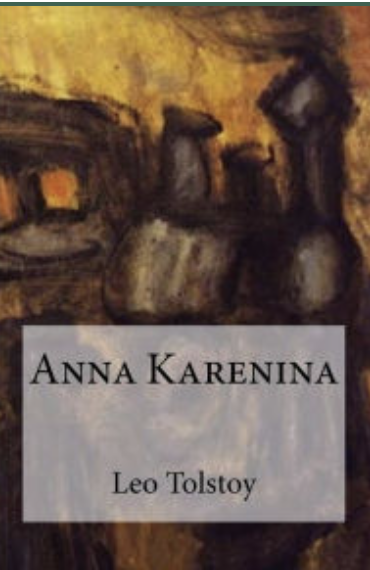 War and Peace and Anna Karenina are the two greatest works by Tolstoy, the former published in 1869, the latter published in installments from 1873 to 1877. They are regularly compared in terms of the difference in style. For some scholars, the inclusion of essays in a narrative that tends to be fictitious makes it difficult to categorize War and Peace as a novel. Tolstoy wrote an interpretative note entitled ‘A Few Words on War and Peace’ in which he explicitly confirmed that this work “is not a novel, even less is it a poem, and still less a historical chronicle.” This explanation by the author makes Anna Karenina his first novel. Another important difference is the time where the two works take place. War and Peace happens during the French invasion of Russia in 1812 whereas Anna Karenina in the years when it was written. As a serial, it took several years to be completed, allowing Tolstoy to witness and describe through his characters, how the society was changing, including his ideas about his country and his own class.
Considered as one of Tolstoy’s masterpieces, Anna Karenina is best known for its outstanding portraits of the compelling characters and extraordinary situations in the story. It has the typical Tolstoy’s signature style to allow the readers to explore the complex personalities of the characters, and to learn about their most intimate desires and emotions as well as ideas and tastes. The novel is full of interesting dialogues and conversations among various topics, ranging from the most frivolous gossips to highly sophisticated issues such as education, religion, morality, and politics, etc.
One of Tolstoy talents is to create distinct, believable characters that the readers quickly identify with, describing in detail their actions, ideas, and intimate thoughts. Tolstoy’s writing is an invitation for the readers to be the witnesses by sharing the atmosphere of different situations like attending events such as a ball, a concert, a dinner, a hunting trip or a horse race. His rich language helps us discover where his ideological affinities and antipathies lie in respectively. Many times his characters impersonate a part of himself or are inspired by close friends or family members which makes his novels somewhat autobiographical especially when he makes Konstantin Levin, one the story leading characters, a kindred soul.
The novel also highlights the situations of the arrogant declining aristocracy challenged by only a few progressive reformers as well as the rising ‘nouveau-riche’ that embraces the luxuries and a colorful lifestyle. Some from the old world aristocracy are struggling to keep up their expensive level of living with increased debt and a rapidly diminished inheritance or income from the land.
There is also another type of aristocrats that can be contented with a simple life. They are truly concerned about the problems confronting the peasants and think that land is a relatively important issue in Russia compared to the rest of Europe.
Tolstoy also shows the double-standard morality of the Moscow and Petersburg high society that ostracizes the heroine Anna, who chooses to sacrifice her honor and her family for the sake of love.
After finishing the last chapters of Anna Karenina Tolstoy renegaded his aristocratic background and concentrated on “morally improving tales”. He published dozens of pamphlets and essays promoting anti-establishment Christian values in an attempt to foment social change. Two years after Anna Karenina was released in 1889 Tolstoy finished The Kreutzer Sonata, initially banned, a novella that was considered to be one of the best books on jealousy and sexual obsession. Many critics think that it matches William Shakespeare’s Othello, Fyodor Dostoevsky’s The Eternal Husband, Thomas Hardy’s Tess of the D’Urbervilles, and many other great novels or plays dealing with these complex dark emotional attributes of destructive human relationships.
In Anna Karenina, unfaithfulness or adultery is one of the central topics entangled with jealousy that also troubles many other characters in the novel.
It is possible to find some similarities between Anna Karenina and other 19th Century romantic novels where certain heroines are married to an older man with high positions in society and break their marriages fatally falling in love with young officials. As an avid reader of French literature and politics, Tolstoy was familiar and probably read Adolph, the classic novella by Benjamin Constant. In both stories, the heroine fall in love with young and attractive official, Anna with Vronsky and Ellénore with Adolph. Both give up their stable and privileged status and abandon their husbands. They lose a comfortable life and are rejected by the society. However, the similarities end there since the stories unfold in a different way.
Anna is not abandoned by her suitor whereas Ellénore is. Even though proud of his conquest, Vronsky is captivated by Anna’s looks and personality and ardently pursues her, regardless of the consequences of getting involved with a married woman. He makes no excuses and wants to live together with Anna and even proposes marriage. Adolph, on the other hand, brags about his conquest and indulges himself thinking that “younger men.. were delighted with the skill with which I had supplanted the Count (i. e. Ellénore’s husband),“ They, congratulated me on my conquest and undertook to imitate me.” For Ellénore, it is a short, passionate love affair, that in the end, brings great pain.
Vronsky is madly in love with Anna and faces the challenges. He openly evaluates the available options. Reflecting their situation he quietly thinks; “If I told her to leave her husband, that must mean uniting her life with mine; am I prepared for that? How can I take her away now, when I have no money? Supposing I could arrange…. But how can I take her away while I’m in the service? If I say that—I ought to be prepared to do it, that is, I ought to have the money and to retire from the army.” Money should not necessarily be a problem, since his family is immensely wealthy to allow them a comfortable life abroad. He is even ready to sacrifice a promising military career for Anna in Russia.
Vronsky also knows that his decision has very minor social risks and could even enhance his image as a sophisticated, worldly man. “He was very well aware that he ran no risk of being ridiculous in the eyes of .. fashionable people. He was very well mindful of the fact that in their eyes .. the position of a man pursuing a married woman, and, regardless of everything, staking his life on drawing her into adultery, has something elegant and grand about it, and can never be ridiculous;..…”
However, the impact is somewhat different on Anna’s side. She needs to make the greatest sacrifice of leaving her loved child. And, opposite to the admiration that Anna’s suitor draws from certain social circles, she is made an outcast by most of her “friends,” who turn their back and harshly criticize her. Tolstoy’s description of the rough responses to Anna’s conduct shows one of the darkest sides of the Russian aristocracy. “The greater number of the young women, who envied Anna and had long been weary of hearing her called virtuous, rejoiced at the fulfillment of their predictions, and were only waiting for a decisive turn in public opinion to fall upon her with all the weight of their scorn. They were already making ready their handfuls of mud to fling at her when the right moment arrived. The greater number of the middle-aged people and certain great personages were displeased at the prospect of the impending scandal in society.”
Anna and Vronsky are not the only important characters in the novel. Anna’s brother Stepan Arkadyich Oblonsky (Stiva) and his friend Konstantin Levin, who later becomes his brother-in-law, also have great significances. They embodies two very different personalities exhibiting the contrast between the two styles in the old aristocracy in Russia at the time.
Oblonsky is a well regarded government official but at the same time becomes very irresponsible with his financial situation continuing to borrow money to maintain a high living standard. While he indulges himself with fancy dinners, his family are struggling and have to endure the inconveniences with their summer country house which is in dire need of visible repairs. On top of this, he is also an unfaithful husband and caused social humiliation on his family.
As a contrast, Levin is a character that represents Tolstoy values and ideas. He enjoys a straightforward austere life in the country coexisting with the peasants. Being a member of the aristocracy that owns land, he decides to stay far from what he considers a frivolous city life. Levin is also intellectually engaged, writing a book on agriculture with the particular problems the peasants and land owners face in Russia. He is an idealist that dreams of a non-violent revolution among the following lines. “This is not a matter of myself individually; the question of the public welfare comes into it. The whole system of culture, the chief element in the condition of the people, must be completely transformed. Instead of poverty, general prosperity, and content; instead of hostility, harmony and unity of interests. In short, a bloodless revolution, but a revolution of the greatest magnitude, beginning in the little circle of our district, then the province, then Russia, the whole world.”
The clash of personalities between the two characters is described in different chapters of the novel, particularly when Arkadyevitch, facing bankruptcy, decided to sell a forest without consulting his friend Levin, who knows the buyer and the price of the land is baffled when Oblonsky mention the terms of the operation “’Then you’ve as good as given away your forest for nothing,’ said Levin gloomily.” Surprised Stepan Arkadyevitch reply, “How do you mean for nothing?” with a good-humored smile” and with distinct arrogant tone explicitly referring to Levin continue “Oh, these farmers!” said Stepan Arkadyevitch playfully. “Your tone of contempt for us poor townsfolk!… But when it comes to business, we do it better than anyone. I assure you I have reckoned it all out,” he said, “and the forest is fetching a very good price..”
Tolstoy also includes a minor character to mock the “nouveau-riche” aristocracy. The author introduces the pompous Vasenka Veslovsky who is invited by Arkadyevitch to visit Levin in the country, “a brilliant young gentleman in Petersburg and Moscow society. “A capital fellow, and a keen sportsman,” Stepan Arkadyevitch said, introducing him.” Levin has a different impression seeing his unexpected guest as “a quite uncongenial and superfluous person.”
Tolstoy makes a caricature of this “gentleman” when the three go hunting the next day. Pretending to be at home in the country, he uses a different outfit, appearing in a pair of expensive new boots and an exotic hat. “Vassenka Veslovsky had had no notion before that it was truly chic for a sportsman to be in tatters, but to have his shooting outfit of the best quality. He saw it now as he looked at Stepan Arkadyevitch, radiant in his rags, graceful, well-fed, and joyous, a typical Russian nobleman. And he made up his mind that next time he went shooting he would certainly adopt the same get-up.”
It is not the intention of this long note to go through the vivid descriptions of all the characters and situations encompassed in this novel. Many critical characters are not included here as are the cases of Anna’s husband whose anger and dilemmas facing his wife’s affair, and Kitty, Levin’s wife, who deals with his jealousy when newly wedded. I also did not include here Tolstoy’s brilliant accounts of an election, the discussion of the music played in a concert, the interesting conversations over some sumptuous dinners, and much more.
The idea of this review, like the others, is to encourage those readers that have not yet had the opportunity to try this masterpiece and those who, like me, read it a long time ago, to look for it in their library or to download a copy, even for free, with their iPad to enjoy it again.
Anna Karenina is a work of art that allow the readers to enjoy and learn from Tolstoy’s incisive psychological skills about the universal human conditions, independently of time and place. As a masterpiece classic, this title will be permanently available in print and eBook or any other up-to-date formats for the enjoyment of future generations.
The power of demagogues.“What you must do .. is have the rabble on your side. With the rabble on your side, no one can get at you.” From: Michel Houellebecq. “The Possibility of an Island. 2006”
Posted: August 25, 2016 Filed under: Uncategorized Leave a comment“They are on my side,” I protested; “they come to my shows.”
“That’s not enough; you’ve got to go further. What they respect is money. You’ve got money, but you don’t show it off enough. You’ve got to blow it a bit more.”
Excerpt From: Michel Houellebecq & Gavin Bowd. “The Possibility of an Island.” Knopf, 2006. iBooks.
This material may be protected by copyright.
Check out this book on the iBooks Store: https://itun.es/us/KJxiz.l
“Living in a Time of Demagogues” a quote from 1899 novel “Imperium in Imperio: A Study of the Negro Race Problem.” Sutton Elbert Griggs (1872-1930) “If you heed my voice you shall become true patriots. If you disregard it, you will become time-serving demagogues, playing upon the passions of the people for the sake of short-lived notoriety. Such men would corral all the tigers in the forest and organize them into marauding regiments simply for the honor of being in the lead.”Sutton Elber
Posted: August 20, 2016 Filed under: Books, Current Times Leave a comment“…Use not the misfortunes of your people as stones of a monument erected to your name”
Excerpts From: Sutton Elbert Griggs. “Imperium in Imperio: A Study of the Negro Race Problem.” iBooks.
This material may be protected by copyright.
Check out this book on the iBooks Store: https://itun.es/us/JskwE.l
Against the crowd of analysts and negative bias reporting in the financial press anticipating the demise of Apple, savvy investor WB made a big profit
Posted: August 16, 2016 Filed under: Uncategorized Leave a commentWarren Buffett’s Berkshire Hathaway boosts AAPL stake to almost $1.5B, likely made $194M profit to date
ISIS Accelerates Destruction of Antiquities in Syria – The New York Times
Posted: August 25, 2015 Filed under: Commentary, Technology Leave a comment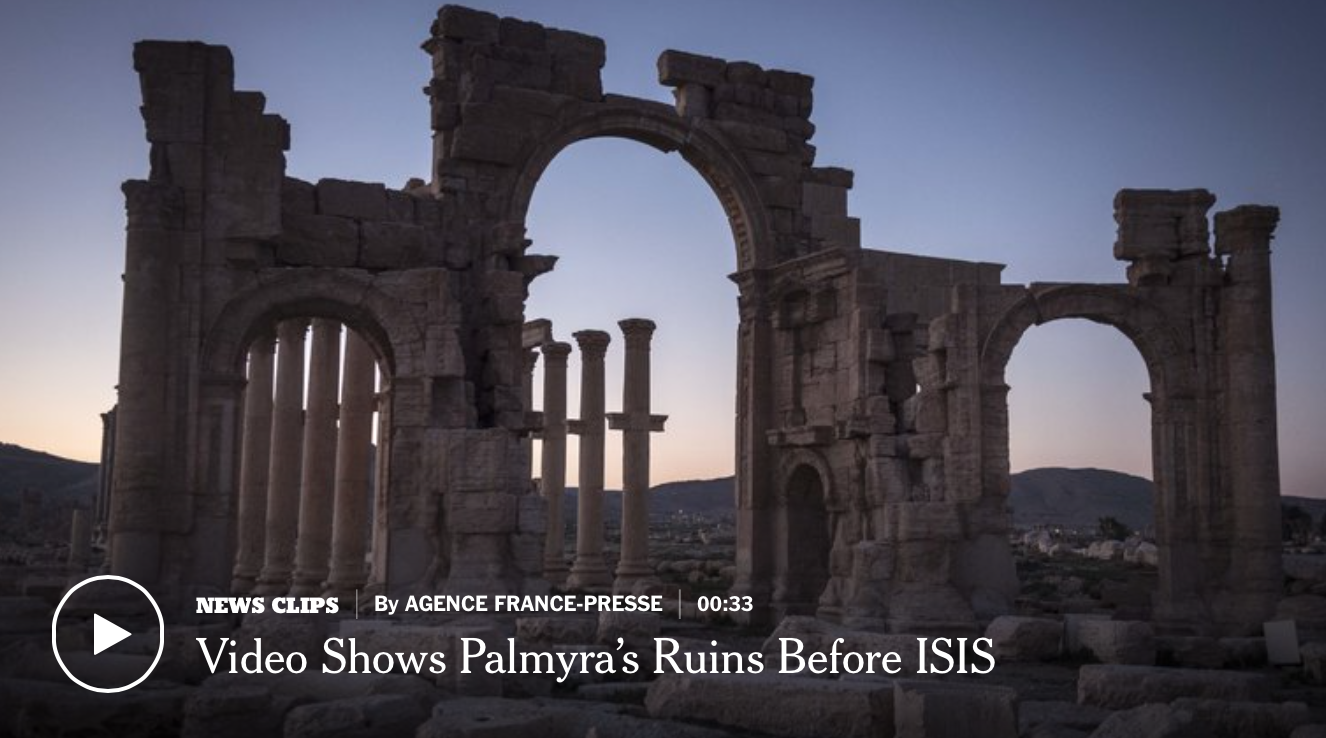 The barbaric attack on human beings with mass killings, public decapitations of innocent people, rape of women and the destruction of millenary cultural sites require a stronger action.
The war intensified and current strategy to ended and stop the barbaric actions seem far from successful.
Today news only adds to the list and deserve a stronger condemnation.
ISIS Accelerates Destruction of Antiquities in Syria – The New York Times.
Irrational exuberance
Posted: August 25, 2015 Filed under: Commentary | Tags: Apple, FTimes Leave a commentThe Financial Times has a problem with Apple and clearly over the years has a negative bias towards that company. Any problem related with Apple is magnified. I will demonstrate with the dozens of misleading headlines I have collected. On the other hand, significant problems in other tech companies are ignored or not reported. As examples bugs in Android that affect more than 50% of the base or the flops of products.
I will be posting previous articles with commentaries and start with yesterday article. Bad reporting or bad faith of the editors.
My comment to the article:
For some reason, the article did not include the dramatic fall from clearly overvalued stocks. Particularly, ignored Netflix (from $ 128 to $ 103) more than 20%, Amazon ( $540 to $ 494) 10%, Google, Facebook and Tesla are also down.
The quoted stocks in the article, (Apple, Intel and Microsoft) are in a different category; they are profitable and pay a dividend.
The article to be relevant should have been about the overdue realignment of the market and a bubble burst.
Savvy investors probably will change from “momentum”, “hype”, “sentiment” that created a bubble with overvalued tech stocks to companies with real value, low p/e, profits, dividends, etc.
As in the dot-com bubble, the press has been instrumental inflating the market.
Opinion: Will the launch of Apple Music mark the beginning of the end for Spotify?
Posted: June 20, 2015 Filed under: Uncategorized Leave a comment“The Left Handed Woman” by Peter Handke. On Women’s Freedom from the Bondage of Undesirable Marriage
Posted: January 6, 2015 Filed under: Books | Tags: Book Reviews, Film and Books, German Literature, Peter Handke, Women Issues 3 Comments The Left-Handed Woman is probably one of Peter Handke’s best known novellas, translated into more than a dozen of languages. Two years after being published in 1978, it was made into a film that Handke adapted and directed. The film was nominated for the “Golden Palm Award” at the Cannes Film Festival and has won several prestigious prizes.

Handke was born in Carinthia, Austria in 1942. In his early years he endured painful experiences from the horrors of Nazism and World War II. A Sorrow Beyond Dreams, a poignant memoir was probably inspired by some ordeals from his childhood – a broken family with a drunken stepfather and a mother who committed suicide. His works tend to incorporate several aspects of the complex relationship between parents and children, a subject that is also present in The Left-Handed Woman. At the beginning of Handke’s co-written multi-award winning film Wings of Desire (co-authored with its director Wim Wenders), a homesick voice dealing with a child from Song of Childhood, his most famous poem, was used. Below I am quoting a few lines to offer you a taste of the nostalgic tone.
“When the child was a child
It walked with its arms swinging,
wanted the brook to be a river,
the river to be a torrent,
and this puddle to be the sea.”
As a multi-talented artist and one of the most recognized living German-language writers, Handke has produced dozens of books including poetry, novel, essay, memoir, translation and controversial theatre plays that he directed and acted. He was also quite active in films, writing many screenplays, particularly the adaptations of his own novels Absence and The Left-Handed Woman which he directed, as well as City of Angels directed by Bradley Siberling and Wings of Desire directed by Wim Wenders as mentioned earlier.
Marianne, the main character in The Left-Handed Woman, is 30 years old and most of the time in the story she is only referred as “the Woman”. She is married to Bruno, who is constantly travelling as the “sales manager of the local branch of a porcelain concern well known throughout Europe”. They have one child, Stephan, a quiet and detached boy who is referred to sometimes in the novella as “the child”. They “lived in a terraced bungalow colony on the south slope of a low mountain range in western Germany, just above the fumes of a big city.“
Other relevant characters in the novella are Franziska, a close friend of the couple and the teacher of the child. Like the main character, some of the characters are also named by only a generic name to refer to their identity or profession. The Publisher is a former boss of the woman, who is “a heavyset but rather fidgety man of fifty” who dates younger women. The Father of the Woman, another character, brings into the story the Actor when he identifies him in the street and brazenly tells him that he was “not shameless enough for an actor. You want to be a personality, like the actors in those American movies, but you never risk yourself. As a result, you’re always posing.” Two additional characters with minor roles are the Chauffeur of the Publisher and the Salesgirl, a single mother with a baby.
Handke uses a family as a microcosm to display the problems of many women in Europe, especially in Germany who suffer from dependency on domineering husbands. They live isolated in suburbs taking care of children that are often absent-minded or spoiled, and not quite close or loving.
From the beginning of the novella one can easily spot Bruno as a selfish man that treats his wife as a docile object to fulfill his selfish needs. Handke manages to disclose this authoritarian nature when Marianne pick ups Bruno from the airport after he has been traveling for weeks. Bruno talks to her in a bossy tone and doesn’t seem to care for her opinions, “Let’s go to the hotel in town for a festive dinner. It’s too private here for my taste right now. Too—haunted. I would like you to wear your low-cut dress.” Without objecting to this command, Marianne asks him “What will you wear?” .… “Bruno: “I’ll go just as I am.” The same thing happens again at the end of the dinner, when Bruno tells her, “We’ll spend the night here. Stefan knows where we are. I left the telephone number on his bedside table.” The woman lowers her eyes while Bruno tells the waiter. “I need a room for the night,” he said. “You see, my wife and I want to sleep together right away.”
In this sequence early in the story, Handke makes explicit the desire of Marianne’s to move away from an inconsiderate husband and to live alone with their son. Walking back home the morning after the night at the hotel, Marianne tells Bruno without warning: “I suddenly had an illumination…that you were going away, that you were leaving me. Yes, that’s it. Go away, Bruno. Leave me.”
From that moment, the story starts to focus on the Woman’s new life without a husband, including the struggle with loneliness and the need to adapt to a situation that she has created without regrets. The story unravels through descriptions of her daily routine, her relationship with the child and her encounters with the other characters.
One day the Woman comes across her friend Franziska who asks her “Is there someone else?” She also shows concern for the well-being of her and the child’s, “What will the two of you live on? Have you thought of that?” But at the same time, Franziska is impressed by Marianne’s action and invites her to join her in a women’s group meeting. “They’ll all be so glad to have you. Right now they have a feeling that human thought is in pretty good shape but that life is elsewhere. We need someone who’s making a bit of a break with the normal way of life—in other words, who’s slightly nuts.”
One evening, the Publisher appears at Marianne’s door without previous notice to respond to her, as she has sent him a letter to let him know that she is now in a position to accept his offers to translate for him as in the past. He enters with “flowers in one hand and a bottle of champagne in the other” and says, “I knew you were alone, Marianne.” With this scene, Handke seems to imply that the Publisher expects more than translation work and desires to have a “romantic” night with his new employee. Like many men, he thought divorced or separated women were in need of company, therefore, easy to seduce.
The Actor also appears at Marianne’s door another day approaching her in a more subtle way with romantic “poetic” words, expressing his desire to have a relationship with her: “There are some galaxies so distant that their light is weaker than the mere background glow of the night sky. I would like to be somewhere else with you now.” Insistent on her decision to be alone and probably assuming that these sweet words at the end will turn out to be empty and worthless, the Woman answers, “Please don’t put me in any of your plans.”
With these two events involving Marianne’s intending lovers, Handke seems to show a certain disdain for men that try to grasp weaker women to fulfill their selfish needs either of sex or of ego. Handke further challenges all stereotypes involving this context in his modern attempt on the classic figure Don Juan: His Own Version (published in English in 2011). Handke’s Don Juan travels through different countries and gets in bed with many women, yet he is not a simple seducer. “His power over women is of a different order, and he does not revel in it; on the contrary, it makes him shy. His look … reveals to them the “outrage” of their solitude and sets free their desire, which he then feels duty-bound to fulfil”.
However, in The Left-Handed Woman, male characters are different from Handke’s “Don Juan”. Marianne is not necessarily a feminist nor does she dislike men, but prefers to keep them at a distance. Clearly she chooses solitude rather than having another authoritarian boyfriend like her husband or a fling with an idealist romantic man who might flicker and fade. Marianne, “..looked into her eyes and said, ‘You haven’t given yourself away. And no one will ever humiliate you again.””
The title The Left-handed Woman is taken from a song to which Marianne listens alone “over and over again”. The lyrics make reference to a woman like Marianne, who sits “with others in a Laudromat,”; comes “out of with others from the metro exit” or “from an office building”. The tune continues as if mirroring Marianne’s isolated daily life: “She sat with others on the edge of a playground, But once I saw her through a window Playing chess all alone”. The song ends telling the left-handed woman: “I want to see you in a foreign continent, For there at last I shall see you alone among others, And among a thousand others you will see me, And at last we shall go to meet each other.”
Excerpts
1). iBook: Peter Handke. “Left Handed Women.” iBooks. https://itun.es/us/WcdGD.l
Originally published in German under the title Die linkshändige Frau, ©1976 by Suhrkamp Verlag, Frankfurt am Main”. English translation “Published simultaneously in the USA and Canada in 1997 by McGraw-Hill Ryerson Ltd., Toronto”
2.) Joel Agee. Man of Constant Sorrow, New York Times, February 12, 2010. Link: http://www.nytimes.com/2010/02/14/books/review/Agee-t.html?scp=1&sq=joel%20agee&st=cse&_r=0
3) Peter Handke. Don Juan: His Own Version, Translated by Krishna Winston, Farrar, Straus & Giroux, 2011.
“On Reading” by Marcel Proust: The Power of Books (Preface to John Ruskin’s “Sesame and Lilies”)
Posted: July 29, 2014 Filed under: Books | Tags: Book Review, iPad, Literature, Marcel Proust, Publishing, Reading 1 Comment


Gustave Flaubert and Herman Hesse Novels and the Corruption of Power.
Posted: August 26, 2015 | Author: jpintobooks | Filed under: Commentary | Tags: Books, Classics, Fiction, Human Condition, Politics, Power | Leave a commentThe great French novelist Gustave Flaubert’s Sentimental Education, published in 1869 is consider to be a romantic novel. In reality, it includes vivid descriptions of France’s social classes, political institutions and practices that lead to the famous 1848 social revolution and the failure of the Second Republic in his country. That event was followed by major upheavals in Europe, particularly in the Netherlands, Germany, Poland, Italy, and the Austrian Empire.
Professor Edward T. Gargan of the University of Wisconsin in an essay published in the Encyclopedia of 1848 Revolutions note that Flaubert took exhaustive care to document and looked for testimonies to authenticate the novel.
Of particular interest, in today’s context of most discussed and for many admired “Spring” and other street revolutions or movements are the descriptions of the behavior of their leaders and activists once in power. Flaubert’s main character attending an assembly “..was astonished at their abominable style of talking, their pettiness, their spite, their dishonesty—all these people, after voting for the Constitution, now striving to destroy it; and they got into a state of great agitation, and launched forth manifestoes, pamphlets, and biographies.”
Herman Hesse in his famous novel The Glass Bead Game published in 1943 also touches this particular dark side of the human condition and its relation to power. In a conversation, the main character tell a friend to “consisted of an unbroken succession of rulers, leaders, bosses, and commanders who with extremely rare exceptions had all begun well and ended badly. All of them, at least so they said, had striven for power for the sake of the good; afterward they had become obsessed and numbed by power and loved it for its own sake.”
Excerpt From Flaubert, Gustave. “Sentimental Education.” Barnes&Noble, 2009-06-01. iBooks. Check out this book on the iBooks Store Link: Flaubert, Gustave. “Sentimental Education.”
Excerpt From Hermann Hesse. “The Glass Bead Game.” Henry Holt and Company. iBooks. Check out this book on the iBooks Store. Link: Hermann Hesse. “The Glass Bead Game.”